

Why Families Trust Us With Their Wills
Wills and estates are not one of many things we do. They are the only thing we do.
That choice was deliberate. Some years ago I decided to stop taking general legal work and focus entirely on will writing, probate, and estate planning. I became a member of AEPA, the Asia Estate Planning Association, because I wanted to be around people who took this subject as seriously as I did. That decision changed how I work and how well I serve the people who come to me.
Five things that are worth knowing about us
1. We only do wills and estates
When you come to our office with a will, you are not one of twenty different types of clients we deal with that week. You are exactly the type of client our whole practice is built around. We know the questions to ask, the mistakes to avoid, and the details that matter under Thai law. That knowledge comes from doing this work every day, not occasionally.
2. We have been invited to teach this subject internationally
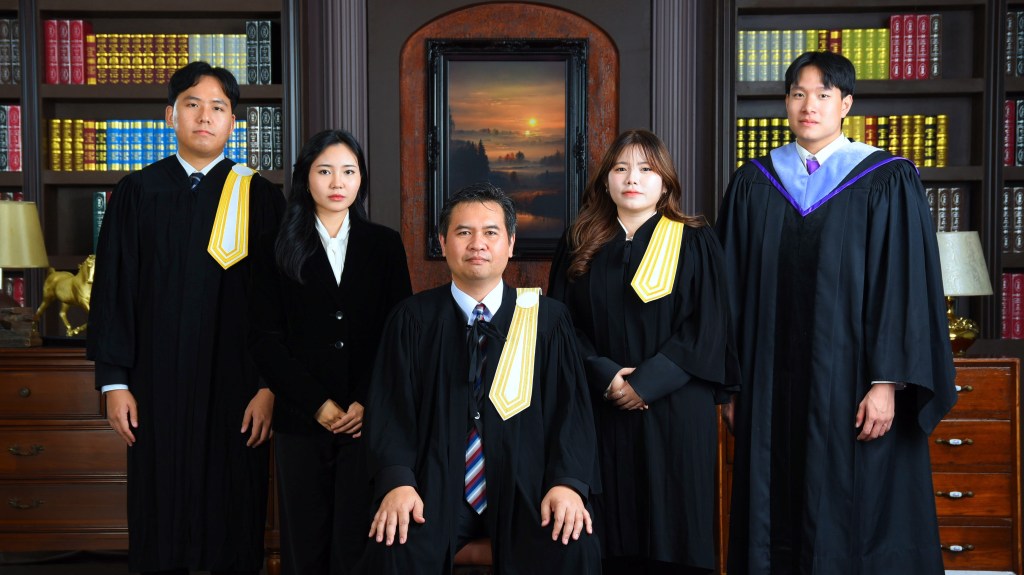
Lawyer Aphiwat was invited to Singapore to deliver a lecture on Thai inheritance and will law to financial advisors at AIA Wealth Center. We also met with the Board of Directors of AEPA for a knowledge exchange on cross-border estate planning.
We share this not to impress but because it matters to you. When a lawyer is invited to teach other professionals about a subject, it usually means they know it well enough to be trusted with it.
3. We are a member of AEPA
AEPA stands for the Asia Estate Planning Association. It is a professional body focused on raising the standard of estate planning practice across Asia. Being part of this association keeps us connected to developments in estate law across the region, which directly benefits clients who have assets or family in more than one country.
4. We have real cases behind us, not just certificates
An American man in a care home who wanted to leave his condo to his son in the United States. We finished the probate during Covid. An Australian man whose new will was challenged in court after he passed away. We had recorded the signing on video and the judge accepted it. His final wishes were protected.
These are real situations with real pressure and real consequences for real families. We have learned from every one of them.
5. We use modern tools without cutting corners
Our office has signed a partnership with SmartWills, a technology company providing intelligent will writing tools across Thailand, Singapore, Malaysia, and Hong Kong. Technology helps with speed. It does not replace judgment. Every will we produce is reviewed by a qualified lawyer before it is signed.
Your Will From Home Does Not Protect What You Have Here
This is something many expats do not think about until it is too late.
If you own anything in Thailand, a condo, a bank account, a car, a business interest, Thai law governs what happens to it when you die.
Without a valid Thai will, your family faces something called intestate succession. That means Thai law decide who gets what based on a fixed order under Thai law. Your partner may not be first in line. Your wishes may not be followed. And the process can take a long time and cost a lot of money.
A proper Thai will fixes this. It is not complicated to make. But it has to be done correctly to hold up when it matters.
What You Can Put in a Thai Will
A Thai will can cover most assets you hold in Thailand. These include:
Condominium units. Bank accounts held in Thai banks. Vehicles registered in Thailand. Personal belongings such as jewelry, furniture, and valuables. Shares in a Thai company. Usufruct rights or lease agreements. Cash and savings.
You can also name a specific executor in your will. This is the person who will be responsible for carrying out your wishes and managing the estate after you pass. Choosing someone you trust and naming them in the will makes the process much smoother for your family.
What a Thai will cannot cover
There are some things a Thai will does not control, and it is better to know this now.
Land held through a Thai company is a more complex matter and needs separate legal advice. Assets in foreign countries are governed by the laws of those countries, not by your Thai will. Life insurance with a named beneficiary already passes directly to that person and does not go through the will.
We will always tell you clearly what falls inside and outside the scope of your Thai will. No surprises.
What Makes a Thai Will Legally Valid
Thai law sets out specific requirements for a will to be valid. If any of these is missing, the will can be challenged or rejected in court. This has happened. We have seen it.
The five requirements under Thai law
1. The will must be in writing.
2. The will must state the date it was made.
3. The testator, meaning the person making the will, must sign it.
4. Two witnesses must be present at the same time and must both sign the will.
5. The two witnesses cannot be beneficiaries. If a witness is also named as someone who receives something in the will, that gift may be invalid.
There are other types of wills under Thai law, including a holographic will written entirely by hand, and a will made before a public officer. Each has its own rules. For most foreigners living in Thailand, a properly witnessed written will is the most practical and the most reliable.
We draft the will in both English and Thai. This is important because the probate process in Thailand is conducted in Thai. Having a Thai language version from the start avoids translation disputes later.
How We Do This Together
People sometimes imagine that making a will is a long and complicated process. It does not have to be. Here is how we normally work.
Step 1. Fill out our checklist
We send you a simple checklist to fill out at home. It covers the basics: what assets you have in Thailand, who you want to leave them to, who you want as your executor, and any other wishes you have. You fill it out at your own pace and send it back to us. No need to come in first. No need to remember everything on the spot.
The checklist is free to request. There is no obligation to continue after you send it back.
Step 2. We draft the will
Based on your checklist, we prepare a draft will in both English and Thai. We send it to you to review. If anything needs to be changed or clarified, we revise it until it reflects exactly what you want.
Step 3. Signing at our office
You come to our office to sign the will. We arrange two qualified witnesses who are not beneficiaries. The signing is straightforward and usually takes less than 30 minutes. We make sure everything is done correctly because this is the step that matters most in court.
Step 4. Storage (optional)
You take the original will home. If you would prefer, we also offer safe storage for your will in our secure box at the office. This is optional but some clients find it useful, especially if they travel frequently or do not have a safe place to keep important documents at home.
Either way, we keep a certified copy in our records. If you ever need to update the will, we can do that easily.
Most clients are surprised by how straightforward the process is. The first conversation is usually the hardest step. After that it moves quickly.
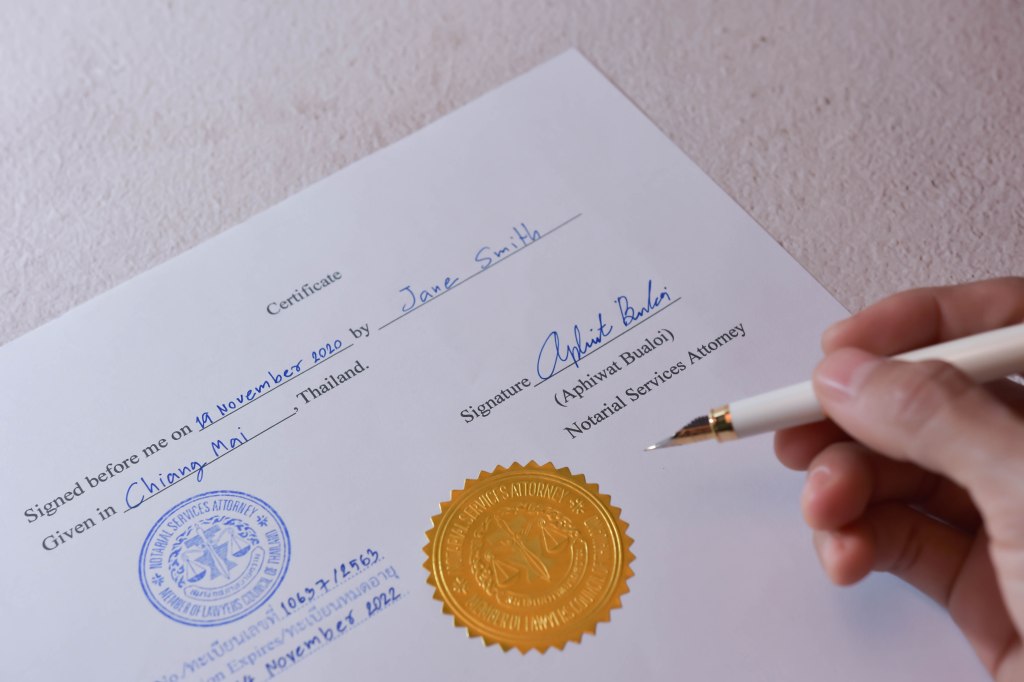
Our Fees
Our fees are set at local Thai rates. We do not charge foreign clients more than Thai clients.
The cost depends on the complexity of your situation. A straightforward will for one person with clear assets and beneficiaries costs less than a situation involving multiple properties, a business, or family members in different countries. We will give you a clear price after the first conversation, before any work begins.
We also offer discounts for couples who want to make their wills together at the same time, and for clients who come back to us later to update their will or handle a related matter.
One thing we hear from clients regularly is that they expected it to cost much more. We think estate planning should be accessible. A will is not a luxury. It is something every person with assets in Thailand should have.
Real Cases, Real Families
We think the best way to understand what we do is to read about what has actually happened. Not examples from a textbook. Real situations.
A father’s final gift
In 2020 I met an American man who was living in a care home in Chiang Mai. He wanted to make a will to leave his condo in Thailand to his son. I helped him draft the will properly under Thai law. Just four months later, he passed away. It was during Covid, so completing the probate was very difficult. But we managed to finish everything. His son received the condo as his father had wanted.
That case taught me that estate planning is meaningful work, especially for families who live far apart.
The will that held up in court
In 2021 I helped a bedridden Australian man in Chiang Mai who wanted to change his will and leave everything to his long-lost brother instead of the previous beneficiary. When I came to see him I happened to bring my camera and recorded a video of the signing.
Six months later he passed away. The previous beneficiary challenged the will in court. We showed the video. The judge said it was clear from the recording that the man truly wanted to give everything to his brother. We won.
That case taught me that doing a will properly and keeping good evidence can protect a person’s real wishes, even when others disagree.
The Italian man and the honest fee
An Italian man came to me for will advice about two years before his passing. He already had a public will so I gave him guidance without expecting anything more. Then one day his wife walked into my office and said her husband had just died. I recognized her immediately. I helped her through the probate with our standard fee.
She told me later that her colleague paid over 200,000 baht to another firm and got no results for months. This case reminded me why we say: honest work lasts. Dishonest gain never does.
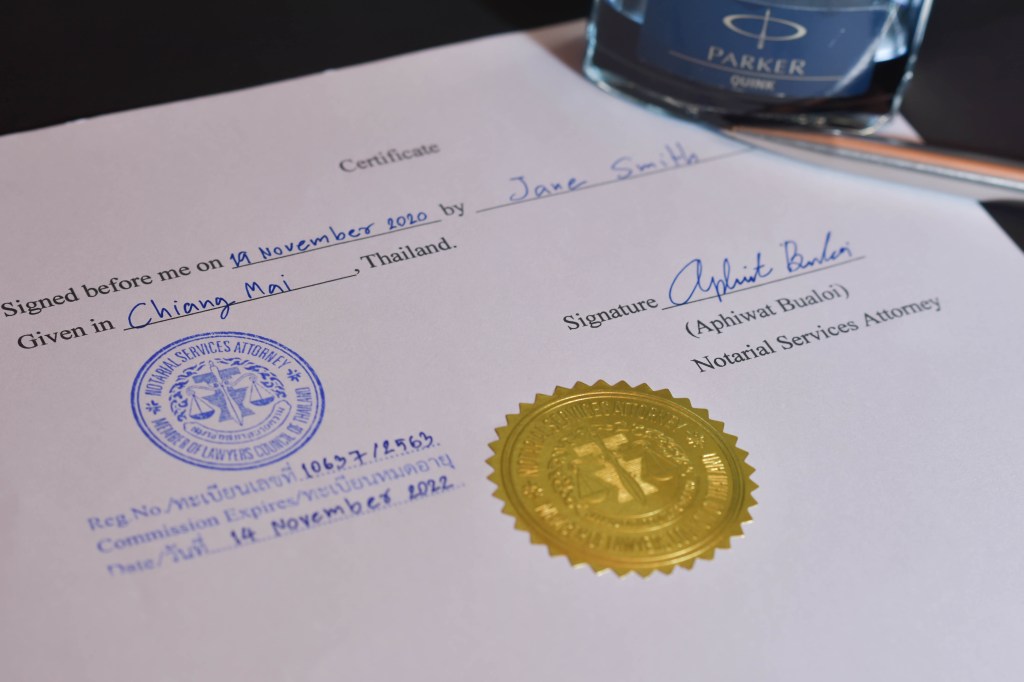
Questions We Hear Often
Can a foreigner make a will in Thailand?
Yes. Any person, Thai or foreign, who is over 15 years old and of sound mind can make a will in Thailand. There is no requirement to be a Thai citizen or permanent resident.
Does my home country will cover my Thai assets?
Not automatically. A foreign will may be recognized in Thailand in some cases but it is not straightforward. It needs to go through a recognition process in Thai court which takes time and money. The simplest and most reliable solution is a separate Thai will for your Thai assets.
What happens if I die in Thailand without a will?
Your assets in Thailand are distributed according to Thai intestate succession law. This means they go to your statutory heirs in a fixed order: children, parents, siblings, and so on. If you are not legally married under Thai law, your partner may receive nothing. Your specific wishes are not considered.
Can I leave my condo to my partner?
Yes, if your partner is named as a beneficiary in a valid Thai will. If you are not legally married and there is no will, your partner has no automatic legal right to the condo under Thai law.
How long does the process take?
The will itself can usually be drafted and signed within one to two weeks from the first consultation, sometimes faster for straightforward cases. Probate after a death takes longer and depends on the complexity of the estate and whether anyone contests the will.
Can I update my will later?
Yes. You can update or completely replace your will at any time as long as you have legal capacity. We recommend reviewing your will whenever your situation changes, for example if you buy new property, get married, or have a change in your family.
Do I need a lawyer or can I write my own will?
Legally you can write your own will in Thailand. But a poorly worded or incorrectly witnessed will can be challenged or declared invalid in court. We have seen this happen. The cost of getting it done properly the first time is small compared to the problems it prevents.
Can my will be in English?
Yes. We draft wills in both English and Thai. Having a Thai version from the start is important because Thai courts operate in Thai. If a will exists only in English, a translation will be required later and that creates a point of potential dispute.
What Our Clients Say
“I have known and worked with Mr Aphiwat Bualoi for several years. Aphiwat is a man of high character and integrity. He is fluent in English. He is disciplined and organized in his work, and I can recommend his services without reservation.”
Michael S., Mesa, Arizona, United States
“It has been a pleasure to work with you and I would fully recommend your services to anyone looking for a fast, friendly English-speaking lawyer in Chiang Mai.”
Andrew L., London, England
“Aphiwat is able to bridge the cultural gap between the Thais and foreigners he works with very easily.”
Peter R., Chiang Mai, Thailand
“Aphiwat is organized, professional, personable, and ambitious. His command of the English language is impressive.”
Nick M., Utah, United States
Let’s Talk
Making a will does not have to be a complicated or uncomfortable thing. Most of our clients say the first conversation was easier than they expected.
We offer a free consultation. You can ask us anything before you decide to work with us. No pressure. No obligation.
If you live in Chiang Mai or are visiting and want to sort this out while you are here, we are ready to help.
Contact us
Tel: 064-932-1365
Email: info@aphiwatlaw.com
Office: Room 3i, Floor 3, 191 Huykaew Road, Suthep, Muang Chiang Mai 50200
Website: aphiwatlaw.com
We work with English-speaking clients every day. You will not need to explain your situation twice.
 Aphiwat Bualoi Law Office